Physiotherapy in Bowden
Women’s Health Physiotherapy
Individual support through changing bodies and life stages
Women’s health concerns can affect comfort, confidence, exercise, intimacy and everyday life – but they are not always easy to talk about or know where to seek help.
Longer appointments • Assessment on your terms • A clear, practical plan
Women’s Health Physiotherapy at Centred Ground provides respectful, individual support for straightforward pelvic floor and pelvic pain concerns, pregnancy and postpartum recovery, and musculoskeletal changes experienced through perimenopause and menopause
These concerns rarely exist in isolation – symptoms may be influenced by pregnancy, birth, hormonal changes, muscle coordination, bladder and bowel habits, exercise or daily demands.
Longer appointments allow time to discuss what you’ve been experiencing, complete an assessment that feels appropriate for you, and develop a clear, practical plan guided by your concerns, preferences and current stage of life.
Support for changing bodies
You don’t need a diagnosis or the “right” words to book. If something has changed, feels uncomfortable or is holding you back, that’s reason enough to talk it through.
Bladder and pelvic floor concerns
- Urine leakage when coughing, sneezing, laughing, running, lifting or exercising
- A sudden or difficult-to-control urge to pass urine
- Increased frequency
- Difficulty identifying or coordinating the pelvic floor muscles
- Uncertainty about whether pelvic floor exercises are being done correctly
Pelvic floor care isn’t simply about doing more “Kegels” – some people need help improving strength, while others need to improve relaxation, coordination or timing. Support may include pelvic floor rehabilitation, bladder retraining strategies and review of relevant triggers or habits.
Pelvic pain
Symptoms that may be associated with prolapse
- Vaginal heaviness or pressure
- A sensation of something coming down
- A vaginal bulge
- Symptoms that increase after standing, lifting or exercise
Perimenopause and menopause
- Frozen shoulder
- Tendon pain
- Headaches
- Reduced strength or confidence with exercise
- Changing continence symptoms
Not every symptom during this stage is caused by hormonal change – assessment considers what’s actually relevant for you.
Pregnancy support
Moving comfortably through pregnancy
- Pelvic floor awareness
- Movement guidance
- Pelvic & hip discomfort
- Back & rib discomfort
Postpartum
Postpartum assessment and return to movement
Postpartum physiotherapy may help with pelvic floor rehabilitation, continence concerns, pelvic heaviness, abdominal coordination, back or hip pain, and returning to exercise – with no single timeline that applies to every woman.
- Walking
- Gym
- Yoga
- Recreational exercise
What a pelvic floor assessment may involve
An internal examination is never compulsory. You can ask questions, decline, pause or stop at any time.
An internal vaginal examination may sometimes help assess pelvic floor strength, coordination or tenderness. It will only be offered with informed consent after the purpose, process and alternatives have been explained.
- Ask questions
- Decline
- Pause
- Stop at any time
- Bring a support person
Our scope
Honest care within a clearly defined scope
Offered at Centred Ground
- Straightforward pelvic floor concerns
- Pregnancy and postpartum support
- Musculoskeletal changes through perimenopause and menopause
- Screening for signs that may be consistent with prolapse
Referred to other specialists
- Formal prolapse grading
- Comprehensive prolapse management
- Pessary prescription
- Complex pelvic pain presentations
Related pages
Book Physiotherapy
Longer, individual appointments with time to listen, assess thoroughly and develop a clear plan with you.
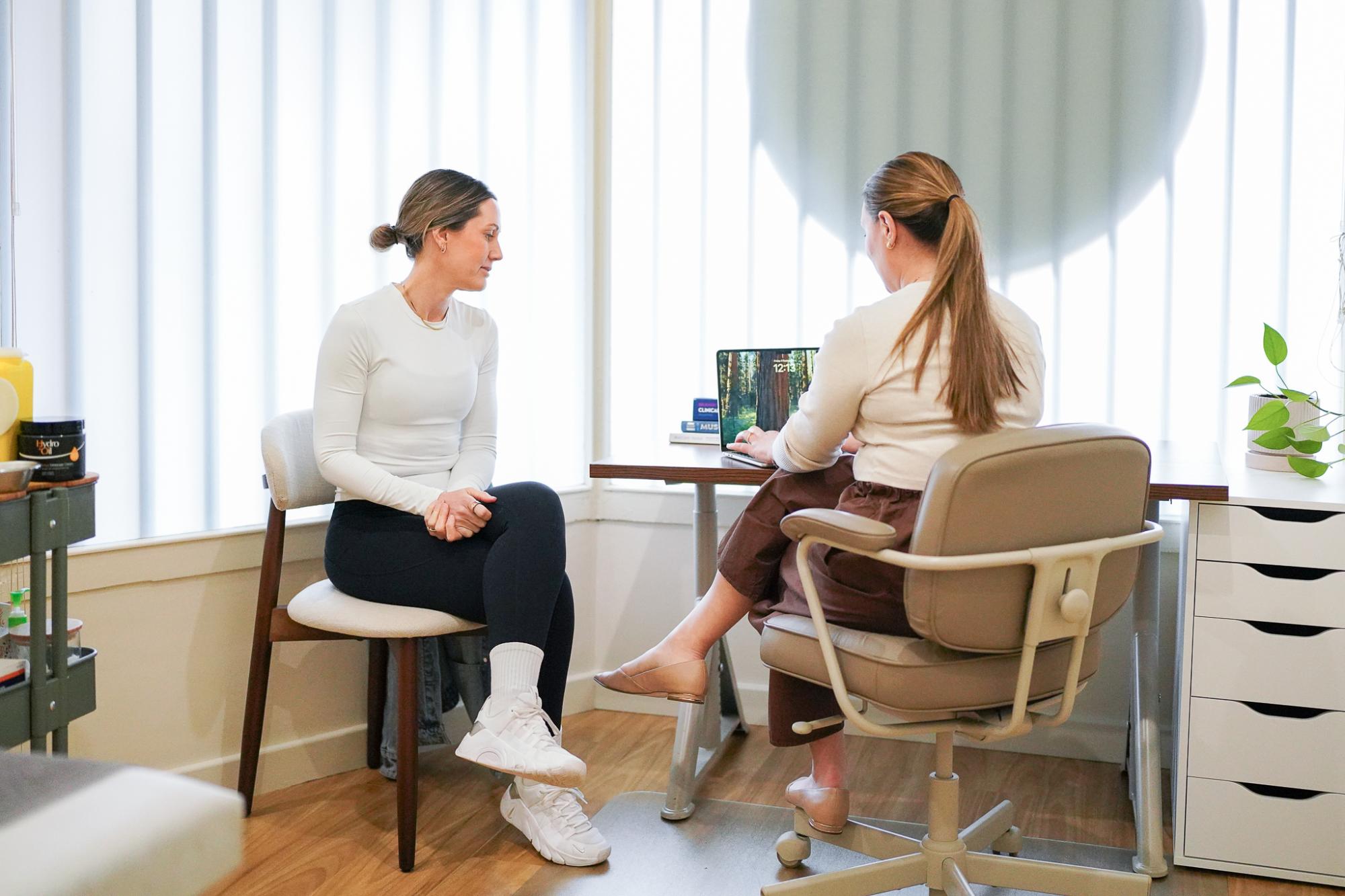
Your first appointment
What happens in your first session, how long it takes and what to bring.
Pain, Injury & Movement
Physiotherapy for everyday pain, stiffness and reduced confidence in movement.